




















For organizations
Courses
Books
InsightsAboutעברית

Keynotes for managers on what managing looks like now

Lior Frenkel gives keynotes for managers and senior leaders on managing in the age of AI, the new employee and creativity at work. On-site or on Zoom, in English or Hebrew.

Lior has spoken at more than 100 organizations. He wrote "The Little Book for the New Manager", Israel's bestselling management book for the past three years, and he teaches management in the age of AI in the MBA program at Tel Aviv University's Coller School of Management.

About an hour, on-site or on Zoom · No cancellation fees

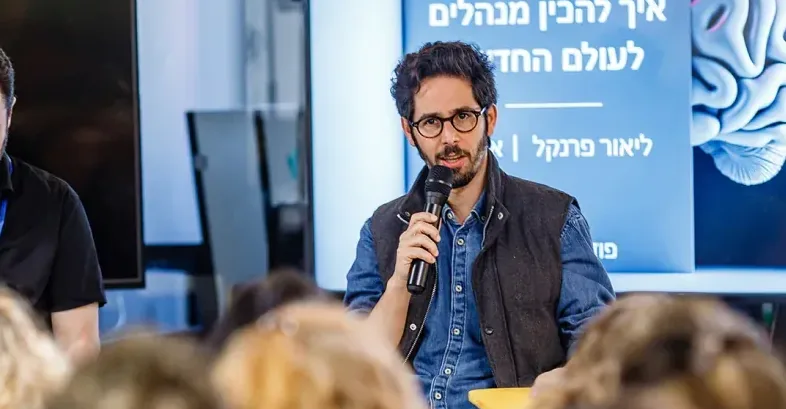
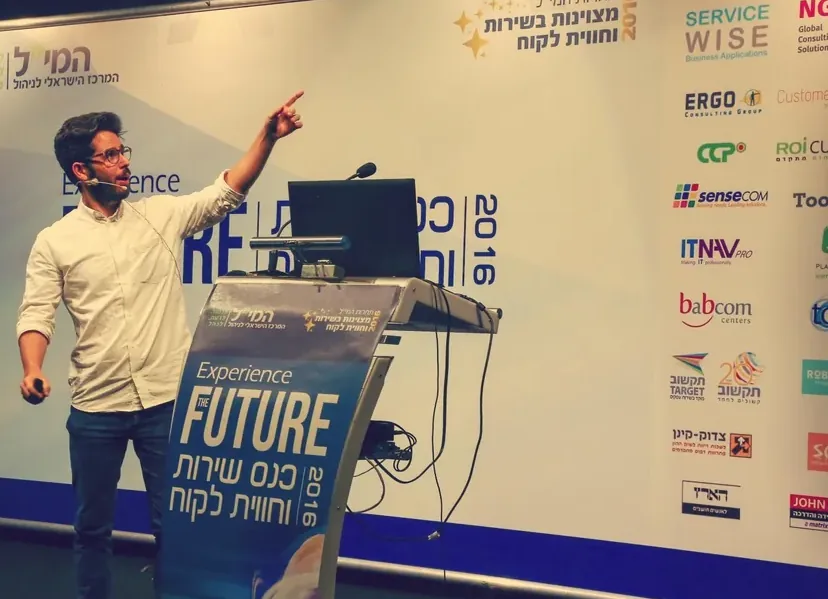
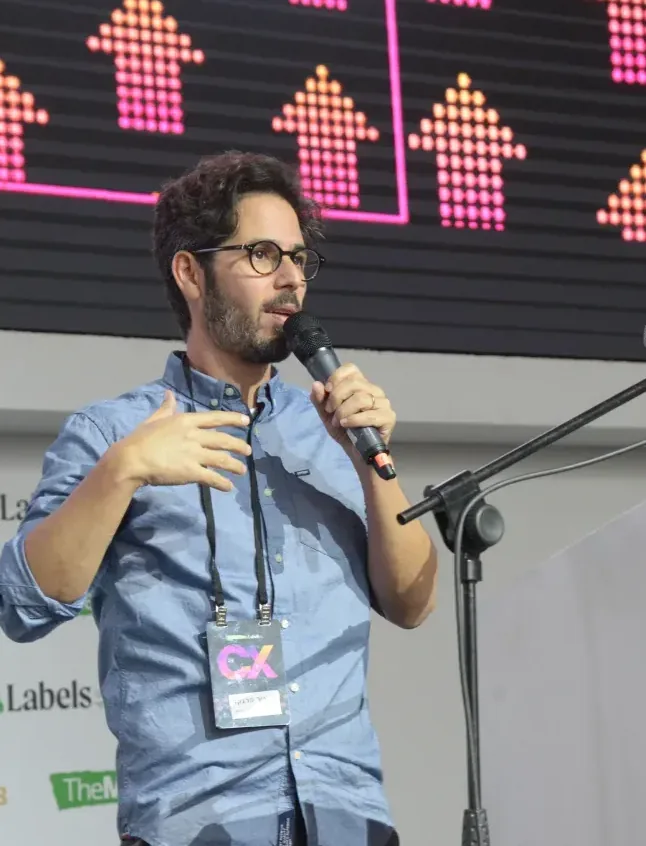
Lior Frenkel speaking at TheMarker Labels CX conference
  • Built around youThe topics are a starting point. After a short call about your goals and challenges, Lior tailors them to you.
  • Only what Lior really knowsTopics he has years of experience in, and methods backed by research. If it's not his field, he'll point you to someone who'll do it better.
  • No cancellation feesNeed to move or cancel? Not a problem.

Where has Lior spoken?

At more than 100 organizations, including:

What HR people say

Lior made sure to be not only precise, up to date and connected to the world of work, but also to our specific organization. The feedback was excellent, and I still hear people on our floor saying "Lior Frenkel."

Michal OhanaManagement and Organizational Development, Bezeq

Lior pushes managers to be entrepreneurial, to bring innovation into the organization, and to be agents of change. He's an excellent speaker, interesting, and he brings a freshness and accessibility that speaks to every one of us.

Kochav ZusHRBP, Unilever

The task was a tough one: a session for a super smart, critical audience that had already seen it all. Lior's magic dust did the job.

Efrat BenariDirector of Organizational Consulting and Training, Tel Aviv University

Lior gave a fascinating talk, streamed live to thousands of employees. It was inspiring and, just as important, very practical. The employees loved him, both in the chat and in the feedback I got afterward.

Tali AssarafTraining Coordinator, Israel Aerospace Industries

In one hour, he walked us through countless changes happening in the world right now. He explained in simple words what "artificial intelligence" is… and it mattered to him to show how each thing he presented was relevant to the people sitting in the audience.

Lior LevinVP People & Business Operations, Syqe Medical

Which keynotes can you book?

Each keynote runs about an hour, on-site or as a webinar. Any keynote can become a workshop, and two or three topics can be combined into a half-day workshop.

For: LeadershipManagers

A Keynote on Managing in the Age of AI

When knowledge is no longer a source of power, what's left of a manager's authority? The big map of what AI is changing in management, and what it means for the role.

Why it helps the organization
Managers who lead the change AI brings, instead of getting dragged along by it.
What participants get
A clear map of what's changing in their role, and what to do tomorrow with employees who are scared, or moving too fast.

Delivered to the leadership teams of KPMG, Deloitte, the Weizmann Institute and many startups.

What's inside
  • The authority crisis in the age of AI
  • What changes for each of the four types of managers (the PAEI model)
  • Radical changes happening in organizations right now, like cutting management layers and the move to Founder Mode
  • What to do with people who use AI too much, and with people who are still scared of it
  • Why employees became managers themselves (of AI), and what that means for us

Want to go deeper into day-to-day situations? The digital course "The New Game" (English edition in production) gives you a ready-made tool for 13 management situations.
For: LeadershipManagers

What Does the New Employee Want? Managing in a New World

A generation that respects authority less than ever, is less loyal to the workplace, and wants as much flexibility as it can get. What makes them join, what makes them stay, and how to update your management mindset to bring them on board.

Why it helps the organization
Managers who understand the new generation, so they hire and keep people better.
What participants get
A real sense of what drives their people, and ways to bring them on board without leaning on authority.

Delivered at the Calcalist and TheMarker conferences, at national conferences, and to more than 150 leadership teams in Israel.

What's inside
  • Why managing today is different from what we knew in past decades
  • How the motivations of the new generations changed, from research and from the field
  • How to manage in a world where there's less respect for authority

NewFor: LeadershipManagers

The Infinite Game: A Keynote for Leadership Teams

Why do some companies thrive in the middle of global chaos, while in others it's the chaos that thrives? An idea from game theory, and how LEGO and Microsoft used it to reinvent themselves.

Why it helps the organization
A leadership team with a shared language for thriving in uncertainty, not just surviving it.
What participants get
Five principles to test decisions against, and a new way to look at developing employees.
What's inside
  • The five principles for moving from a game of survival to a game of thriving
  • How LEGO and Microsoft transformed through the mindset of an infinite game
  • What to look for in employees, and where to develop them so they fit the new game

For: LeadershipManagersEmployees

A Keynote on Creativity and Innovation at Work

You don't need to be born a creative genius. Practical techniques, with the stories behind Dyson, Scotch tape, Netflix, Amazon's one-click ordering and the McDonald's drive-thru.

Why it helps the organization
More ideas for improving processes, products and services, from every level of the organization.
What participants get
Simple techniques to use tomorrow morning, alone or with the team.
What's inside
  • Techniques you can use tomorrow morning, alone or with the team
  • How to create conditions at work that help people be creative
  • What we get wrong when we set up a brainstorm

For: Managers

Developing My Employees

Today's employees don't just want to work. They want to grow. How to run development conversations that strengthen the relationship and build loyalty, even when there's no promotion on the horizon.

Why it helps the organization
Employees who stay and grow, even when there's no promotion on the horizon.
What participants get
The confidence to run development conversations, and answers to the hard questions that come up in them.
What's inside
  • Why "growth" isn't the same as a promotion
  • What managers worry about in development conversations, from "What if they ask for a promotion I can't give?" to "How can I promise anything about the future?"
  • How development conversations raise motivation and build long-term loyalty

For: Managers

The Little Book, Live: Practical Lessons for Managers

Practical lessons from "The Little Book for the New Manager" and 20 years of managing people. Lessons you can start using tomorrow morning.

Why it helps the organization
Managers who get through their first year in the role faster, and with more confidence.
What participants get
Practical lessons on motivation, defining tasks and autonomy, to use tomorrow morning.
What's inside
  • Neuroscience and motivation: why we avoid some tasks and love others
  • Impostor syndrome, and leading a generation that doesn't believe in authority
  • How to define a task so it can't fail, and clear the roadblocks
  • When to give autonomy, and how much

For: ManagersEmployees

Built to Adapt: Working in a World That Won't Stop Changing

Unstable geopolitics, AI closing the skills gap, and business models that change every quarter. Three habits that help you thrive in all of it. Not another mindset talk: people walk out with eight practical tools.

Why it helps the organization
Employees and managers who adapt to change on their own, without waiting for the organization to lead them.
What participants get
Eight practical tools to grow and make an impact, even when everything is moving.
What's inside
  • Growth Mindset: our abilities aren't fixed
  • Skills: how to really grow professionally, without waiting for the organization to promote us
  • Agency: the belief that what we do shapes what happens to us
  • Eight practical tools, including Job Crafting, The Wins File and the Weekly Taking Charge Audit

Check a date →

Management workshops: two hours or half a day

Pick one to three topics and get a half-day workshop. No team-building games, no treasure hunts. Instead: simulations, shared experience, and the skills managers need right now.

Most requestedFor: Managers

Feedback and Difficult Conversations

Managers who stop avoiding hard conversations, and give feedback that doesn't make people defensive.

Why it helps the organization
Managers who resolve conflicts instead of putting them off, and employees who get feedback that helps them grow.
What participants get
A ready-made phrasing template, and practice on real cases that takes the fear out of the next conversation.
What's inside
  • The SBI method, with a ready-made phrasing template
  • How to prepare for a hard conversation to get the most out of it
  • Active listening and "I" statements
  • Simulations based on your real cases

For: LeadershipManagers

AI for Managers

Stop being afraid of AI, and see how the organization gains from it. Managers try the tools themselves, and present a real initiative for the organization.

Why it helps the organization
Real AI initiatives that come from the managers themselves, and less fear of the change.
What participants get
Hands-on time with the tools, and a clear sense of what AI can do for them, and what it can't do yet.
What's inside
  • What you can do with AI today, and what you can't yet
  • Trying out AI tools in groups
  • Each group presents an initiative and rates how realistic it is
  • Who will gain from the change, and who will be scared of it

For: Managers

The Next Startup Is You, for Managers

Looking at yourself as a product, with the organization and the employees as your customers. How to sharpen the value you bring.

Why it helps the organization
Proactive managers who think about the value they bring to the organization.
What participants get
A push to grow, and a map of the skills that will give them an edge.
What's inside
  • Which skills give you a competitive edge in the organization and in the world of work
  • Why doing something for years doesn't mean we're good at it

For: Managers

Authentic Leadership

There's no one right leadership style. Each manager finds their own style, and learns when it's worth changing it.

Why it helps the organization
Managers who lead from who they are, so their people trust them more.
What participants get
A clear view of their own style, the values that guide them, and when it's worth switching styles.
What's inside
  • Five successful leaders, five completely different styles: Sandberg, Nadella, Pichai, Musk and Rometty
  • My Why as a manager
  • A live self-assessment: what's my management style? (the Blake-Mouton model)
  • Situational leadership: matching the style to the employee and the context
  • The three values that matter most to me as a manager

For: Managers

Communicating with Employees

Less friction, more impact. Includes an exercise where managers argue their employees' side of a moment when communication broke down.

Why it helps the organization
Less friction and more commitment between managers and employees.
What participants get
A ready-made plan for setting expectations, and ways to ask for availability without burning people out.
What's inside
  • "Why did this go wrong?": pairs replay a real incident that happened at night, on a weekend or under pressure
  • What would have prevented it, and how to do it better
  • How to communicate a need for high availability and commitment
  • A two-way expectations plan that raises commitment and cuts down on conflict

For: Managers

Managing Up: How to Manage My Manager

Managers who know how to get the resources and support their team needs from leadership.

Why it helps the organization
Managers who get leadership to give the team what it needs, and lead more effectively.
What participants get
More autonomy, less pressure, and a way to say "no" without damaging the relationship.
What's inside
  • Why it's critical to know how to manage our own managers
  • Matching your communication style to your manager's
  • When and how to say "no"
  • Setting expectations upward

For: Managers

Autonomy and Delegation

How much freedom to give, to whom, and when. Autonomy is a powerful motivator, but at the wrong time it costs you.

Why it helps the organization
Less overloaded managers and happier employees, without losing quality.
What participants get
A simple model for knowing how much freedom and support to give each of their people, and when.
What's inside
  • When to give autonomy, and when it's better not to
  • Situational leadership: how much support and how much freedom at each stage in the role
  • How to handle employees who ask for more autonomy

For: Managers

Time and Workload Management

For managers drowning in tasks who never get to "the important stuff." The workshop is built on how Lior runs a startup, a weekly podcast, a book every two years and a community (and is also a dad), without working weekends. Principles, not apps.

Why it helps the organization
Managers who make time to think and lead, not just put out fires.
What participants get
Principles for prioritizing and handling interruptions, so they finally get to "the important stuff."
What's inside
  • Prioritizing: important vs. urgent
  • How to handle jumping between tasks, and finally get to "the important stuff"
  • Dealing with the unexpected
  • Advanced time management techniques

For: Managers

Presentations That Make an Impact: Storytelling and AI

Turn a dry company message into a story people remember: in presentations, in emails to employees and in change management.

Why it helps the organization
Company messages people remember and act on.
What participants get
A story structure that works, AI tools that help build it, and feedback on a real presentation.
What's inside
  • Why stories work, and how to use them in every kind of management
  • An effective story structure: background, characters, conflict, resolution
  • Creating stories with AI tools
  • Groups build a presentation around a good story, and get feedback

For: Managers

Creativity and Innovation in Management

A technique that looks at a product, service or process from seven different angles, plus practice on your own real challenges.

Why it helps the organization
Managers who drive more innovation in their team, with other teams and with customers.
What participants get
A seven-angle technique, and practice on a real challenge from the organization.
What's inside
  • Why creativity is a learned skill, and how to train it
  • Two thinking tools that boost creativity
  • What science says about creativity
  • A SCAMPER exercise in groups, ending with a light competition and a vote

For: LeadershipManagers

Leadership and Podcasting

A podcast workshop that's really a leadership workshop. Practice listening, authenticity and connection, with one of Israel's longest-running podcasters.

Why it helps the organization
Managers who listen better and connect with their people.
What participants get
Hands-on practice in listening and authenticity that doesn't feel like yet another leadership workshop.
What's inside
  • One or two hours
  • Light and fresh on the outside, leadership skills on the inside
  • "Popcorn," Lior's Hebrew-language podcast, has passed 6 million listens and also runs on Globes

Check a date →More on workshops for managers

What's different about a keynote for senior leaders?

The audience. Senior leaders have seen it all (and heard most speakers twice). So less inspiration, more decisions: what the change does to the organization, not just the team, and what mindset you need when the game never ends.

The Infinite Game

Keynotes for HR leaders and HR teams

"Managing in a New World" was built for managers and HR teams, and Lior has given it at national conferences and to more than 150 leadership teams. And for anyone who wants to connect HR to the bottom line, there's a 40-minute recorded digital workshop (in Hebrew).

What does the new employee want?

Keynotes for tech companies

Tech audiences are tough. They work with AI every day, and they've seen every trend come and go. Lior comes from that world: he co-founded three startups, and he's spoken at companies like Microsoft, Google, Intel, eBay, Fiverr, monday.com and Lightricks. And he gives his keynotes in English, for global teams.

Talks for employees

A keynote on AI for managers

This isn't a keynote about tools and prompts. It's about the authority crisis when knowledge is no longer a source of power, and what that means for the manager's role. Lior also teaches this at Tel Aviv University, in the course "Management Skills for the AI Era."

Managing in the Age of AI

About an hour, on your stage

Live Onstage Interviews

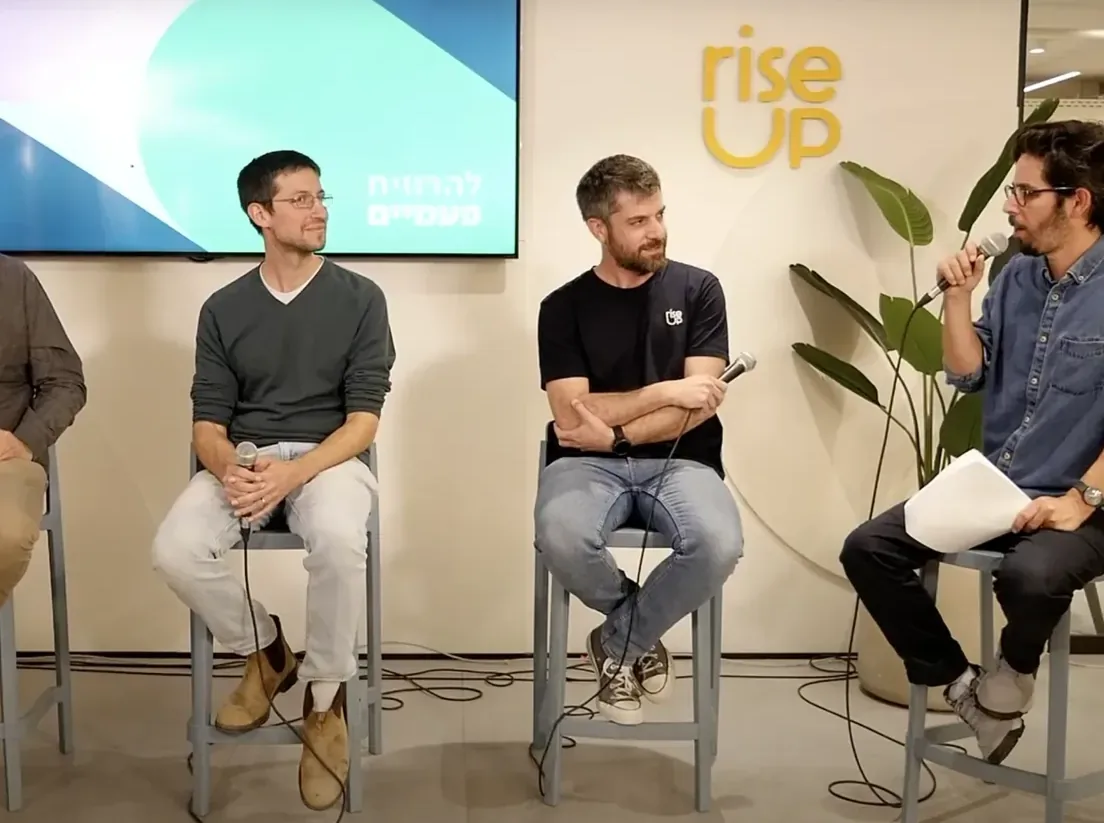
Lior interviews people from your organization in front of a live audience, talk-show style. The messages the organization wants to get across, through an intimate, authentic conversation with someone from the inside.

Why it's good for the organization
The messages the organization wants to get across, through people from the inside that everyone can relate to.
What participants get
Inspiration from people who made it in their own organization, and a clear path to do the same.
  • 60 minutes. Three guests, 20 minutes each, always one on one
  • Built on Lior's interviewing skills from "Popcorn," his podcast, which has passed 6 million listens and also runs on Globes
  • For example, "How do people grow here?" on a career development day: three employees who took impressive paths share how they did it

Booked by Microsoft, Rafael and Intel, among others.

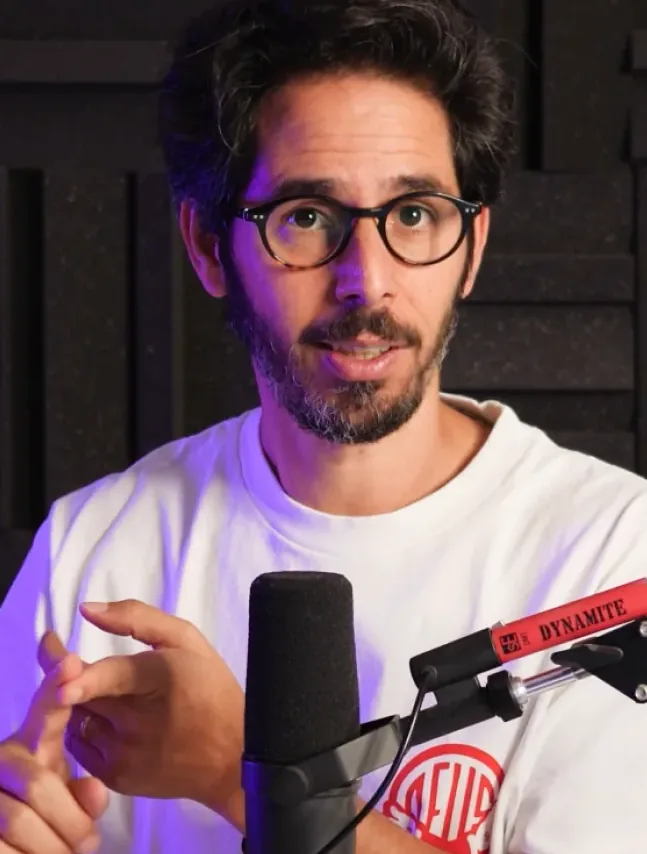
Lior Frenkel at a microphone in a studio

What does Lior sound like on stage?

A short talk, 13 minutes

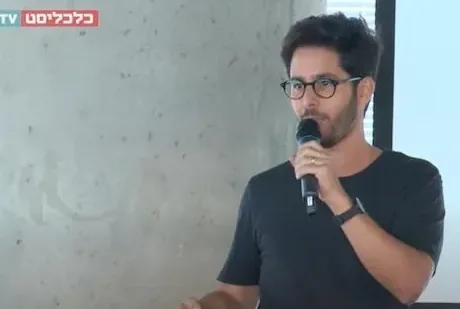
Want to hear him before you decide? Here's a talk from TheMarker Labels (in Hebrew), on the link between Employees 3.0 and customer experience.

More talks and interviews

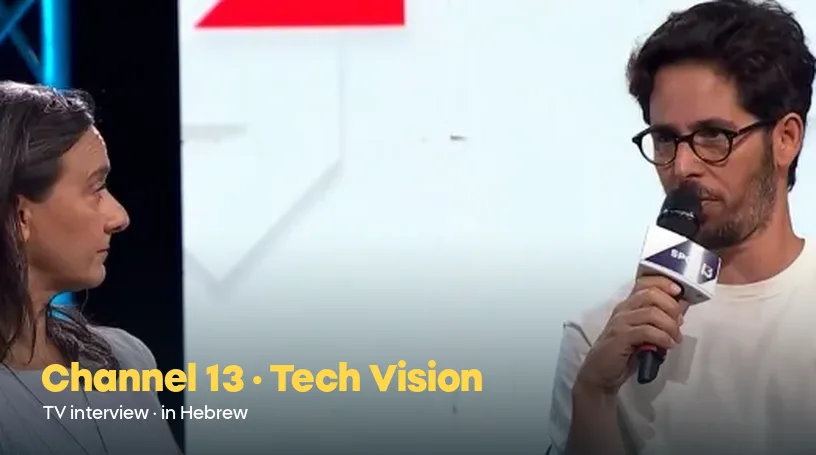
  • Lior Frenkel on Channel 13, Tech Vision: the tech talent crisis

    The tech talent crisis Channel 13, Tech Vision · in Hebrew

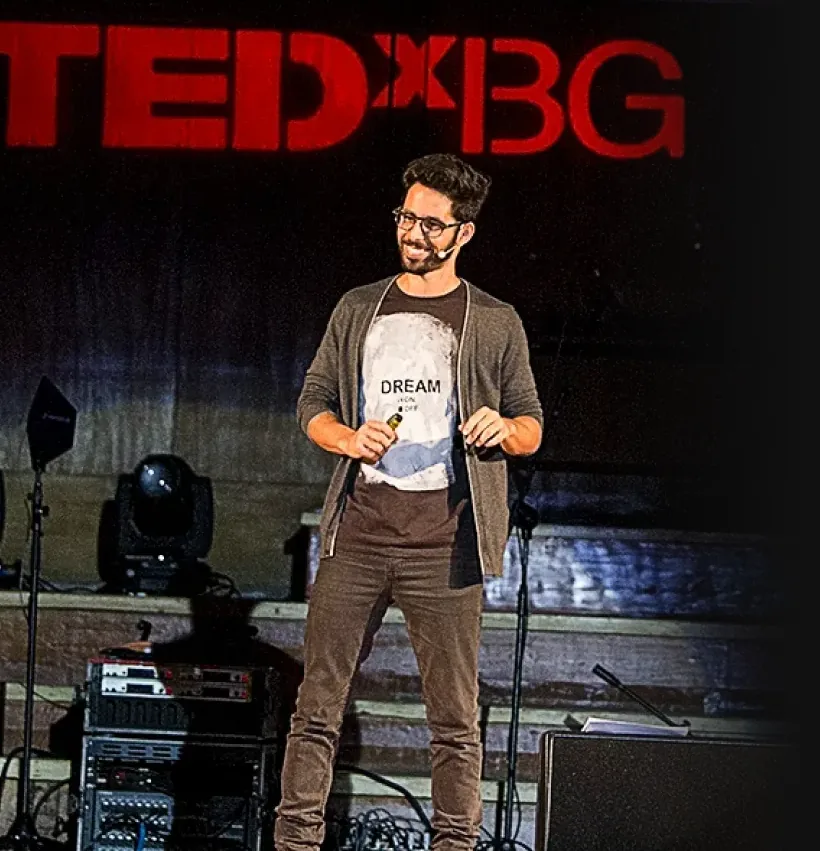
  • Why we should rethink our relationship with the smartphone TEDxBG

  • Employee Experience in the New Era conference Calcalist, 2018 · in Hebrew

  • 16 creative ideas for management development Adaptation · in Hebrew

  • Avivit Klein and Lior Frenkel TheMarker Labels · in Hebrew

  • In-demand jobs and the future of work Jolt · in Hebrew

  • I Want It All National Union of Israeli Students · in Hebrew

  • Lior Frenkel CreativeMornings

  • How to work with clients and stay sane nuSchool · in Hebrew

Lior Frenkel

Who is Lior Frenkel?

An entrepreneur and product person who co-founded three startups. He leads the Adaptation management development program, which also runs at international companies like eBay and Fiverr.

He teaches the course "Management Skills for the AI Era" at Tel Aviv University, and hosts "Popcorn," a Hebrew-language podcast that also runs on Globes and has passed 6 million listens.

He writes and speaks about management and careers in Israel and around the world, including at TEDx and at conferences in Europe. His fifth book, "The Little Book for the New Manager", became a bestseller.

Lior has also worked with EY, the Weizmann Institute, Tel Aviv University, Bezeq, Discount Bank, Bank Hapoalim, Bank Leumi, Nestlé, Strauss, NICE, Cellebrite, Wix, monday.com, Playtika, InVision, Lightricks, Kan 11, Colmobil, Syqe Medical, XT Group, Bazan, the Israeli Ministry of Health, the Israel Center for Libraries.

  • 5books, the latest a bestseller for managers
  • 3startups he co-founded
  • 150+leadership teams have seen "Managing in a New World"
  • 6M+listens to "Popcorn"

Why book a keynote for managers right now?

Because AI is already part of your teams' work. Not next year. Now.

An employee asks her manager, "You're planning to replace me with AI, right?" Someone brings in an answer from a chatbot that contradicts what their manager said yesterday. And someone has to review performance when half the work was done by a machine.

Managers don't have the language for these moments yet. A good keynote right now gives managers a shared language, and gives you a starting point for the annual training plan.

What's the risk in booking a speaker, and how do you reduce it?

The risk: the speaker talks about himself for an hour, and at the end the managers give you that "why did you bring him?" look. Good preparation makes that risk much smaller.

Someone picked this speaker. And usually, that someone is you.

So every keynote starts with a conversation with you: what's going on in the teams, what you've already tried, and what absolutely can't happen in the room. Lior builds the keynote for your specific organization, with examples from your world.

How does it work?

In three steps: check availability, a fit call and a prep call.

  1. Check availabilitySomeone from the team will get back to you soon. If the date is already taken, we'll tell you right away, so you don't waste time.
  2. Fit callA short call with the team, to understand what you need and choose the content and format together.
  3. Prep callIf you decide to move forward and the budget is approved, we set up a prep call to tailor the content to your audience and your goals.

And what do you tell leadership?

We brought in the author of Israel's bestselling management book, who teaches management in the age of AI in Tel Aviv University's MBA program. The keynote was built around what's happening in our teams, and it gives managers a shared language before we build the annual training plan.

What HR people ask us

How much does a keynote for managers cost?

It depends on the format and the location. Booking a few sessions together? There's a discount, even when they're spread across a whole year. Tell us what you need, and we'll send you a proper proposal.

Can we cancel or move the date?

Yes, with no cancellation fees. If you need to move it, we'll move it. No penalties, no fine print.

How long is a keynote for managers?

About an hour, on-site or as a webinar. A workshop runs two hours or half a day.

Can the keynote be on Zoom?

Yes. Lior speaks online too, including a talk streamed live to thousands of employees at Israel Aerospace Industries.

What's the difference between a keynote and a workshop?

A keynote gives a shared language and direction, in one hour. A workshop is two hours or half a day of practice and simulations. Any keynote can become a workshop, and two or three topics can be combined into a half-day workshop. More on workshops for managers.

Do the keynotes also work for employees who aren't managers?

Some talks were built especially for employees, on growing inside the organization, creativity and working alongside AI. You'll find them on the talks for employees page.

What happens after the keynote?

You can keep going with a digital course for managers, a management development program, or Moku (in Hebrew), the simulator where managers practice hard conversations out loud. It's all on the management development for organizations page.

Got a date? Let's check it

Leave your details, and someone from the team will get back to you soon. Prefer email? Write to [email protected]

Got it. I'll get back to you within one business day.